
Fred Hampton, Illinois Chairman of the Black Panther Party, was living with his girlfriend and other Panther friends in the first-floor apartment of this building at 2337 W. Monroe St. on December 4, 1969. At 4:30 a.m. that morning, 14 officers from the state’s attorney office served a warrant to search the premises for illegal weapons. A shoot-out followed, in which Hampton and Peoria Panther chapter leader Mark Clark were killed. But after the sound of gunfire died down, investigations into the incident would shake the foundations of law and order in Chicago, destroy the career of the city’s brightest rising political star, fill newspaper headlines for over a decade, and create a scandal that reached all the way to J. Edgar Hoover’s desk at the FBI.
Fred Hampton’s family came to Chicago after World War II from Haynesville, Louisiana, part of the great migration of southern Blacks into the industrial cities of the North during the late 19th and the first half of the 20th century. Initially settling in suburban Argo, Mr. and Mrs. Francis Hampton both found work at the famous Corn Products plant in that city. The Hamptons’ first child was a daughter, Delores, and shortly after arriving in the Chicago area, their first son, Fred, was born, in August, 1948. A few years later, Iberia Hampton would give birth to a third child, William. The family lived briefly in Blue Island, but then made their permanent home in Maywood, at the time a mixed-race working-class suburb with solid schools and easy access into Chicago.
Growing up in Maywood, Fred Hampton was a good student, and active in sports, playing on the baseball, football, basketball, and wrestling teams at Proviso East High School. It was while attending Proviso East in the mid-1960s that Hampton became deeply interested in the civil rights movement. He began spending his evenings listing to recordings of speeches by Martin Luther King, Jr., and Malcolm X, over and over again, and in this way, developed rhetorical skill that would soon turn him into a political wunderkind. As one Maywood resident later noted, “He never really was a teenager in the normal sense of an adolescent. When other teens were talking about clothes, dating, and sports, he always would be talking about ‘the movement’.”
Hampton was also a natural leader, and began organizing Black students at Proviso East in marches and demonstrations against the school administration, agitating against discrimination and in favor of more resources for minority students. During this period, Hampton’s grades fell, but he nevertheless graduated in 1966. That summer, he found work supporting anti-discrimination efforts in housing markets in Chicago, led by Martin Luther King. Based on his work with the famed civil rights leader, he was appointed head of the youth council of the NAACP in Maywood, and became an active political agitator in that town.
During the late 1960s, Hampton attended Triton College, YMCA Central College, and Malcolm X College sporadically, but his heart was in political organizing, and through the influence of the burgeoning radical movement, as well as hard experiences, he drifted away from the moderate non-violence of Martin Luther King, and towards a more confrontational protest style, which both put him in trouble’s way, and made him a target for conservative elements in society and the police.
 (Pictured: Fred Hampton)
In June, 1967, Hampton was arrested while leading 18 Maywood youths in a protest that turned violent. The group was criticizing the village’s administration for the dearth of public services available to Black residents, particularly a public pool. In those days of segregated pools, white Maywood residents could travel to nearby suburbs to swim, but Blacks were not allowed in pools in upscale suburbs like Oak Park and River Forest. Hampton was arrested again in September, 1967, for leading a protest at Proviso East High School in which a riot erupted and a policeman was attacked.
But Fred Hampton’s most infamous moment took place on July 10, 1968, when a white ice cream truck driver, Nelson T. Suitt, was trolling for customers through a Black section of Maywood, and was accosted by a gang of youths, asking for free product. “Don’t you know you are in a black power neighborhood?” they demanded. Just then, Fred Hampton drove by, and one of the boys told Suitt, “now you’re going to have to give us the ice cream – here comes our leader”.
According to police, the group then attacked and looted the truck, with Hampton personally climbing into the cab and beating Suitt. After his attackers departed, Suitt hailed down a passing police car, and, with the officer, identified Fred Hampton on the street. In his defense, Hampton claimed the truck was already looted when he arrived on the scene, and that the supposed battery on Suitt was a frame-up by the Maywood police, who disliked the protests he led against Maywood village administration.
Shortly after this incident, Hampton joined the Black Panther Party, apparently immediately becoming leader of the Illinois chapter. The BPP was founded in 1966 in Oakland, California, and was notoriously violent, and particularly antagonistic towards police. In one case, a Panther chapter supplied children with coloring books that pictured police being shot and stabbed by Blacks, and included the statement “The only good pig is a dead pig.” By 1968, the BPP had chapters throughout the country and boasted 3,000 – 5,000 members nationally; violent clashes with police were reported in many cities.
Because of the Party’s violent and confrontational nature, being associated with the BPP was no small matter – it was a choice that put one outside the realm of polite society, to say the least. A friend to tried to convince Hampton not to join, arguing that his membership in the BPP would keep him from his potential as a great political leader. The friend said, “We talked about this in depth many times and he used to tell me he was involved in the liberation of people. He used to say he didn’t want to live a long time, but that he wanted to do something while he was alive.” Hampton’s response was prophetic.
As a BPP member, Hampton increased the pressure on the Maywood village government, leading increasingly violent clashes between Black protestors and police. In July, 1968, he led a troop of 150 young men in an assault on Maywood city hall during a city board meeting. When refused entry to the meeting, the group began pelting the building with rocks, breaking out windows and shouting angry slogans. The mayor and other city officials escaped down the back fire escape while the rioters moved down the street, breaking windows and starting fires in stores and homes.
Throughout 1968 and 1969, Hampton led the BPP’s movement in Chicago to recruit college and high school students to the party. He gave speeches at Roosevelt University, DePaul, and several city colleges, advocating the overthrow of the U.S. government, and quoting at length from the Communist Manifesto, and from the works of Mao Tse-Tung. In part for the purpose of improving their public image, the Chicago chapter of the BPP started a “breakfast for children” program, which provided food for Black youth in three locations throughout the city, although critics claimed the program was poorly managed, and that “donations” of food and money were primarily obtained through extortion. A Tribune investigation also revealed evidence that money donated for the program was improperly channeled to pay for BPP members’ car payments and clothes. The BPP also attempted to open a free health clinic in the primarily-Black neighborhood of North Lawndale, although these plans never came to fruition due to opposition from a rival Black youth organization, the Conservative Vice Lords street gang, which controlled that neighborhood.
Through his work in the BPP, and through the nationwide notoriety of the BPP, Fred Hampton was increasingly seen as a political figure, and a threat to the Chicago police and elected officials. In April of 1969, a jury convicted Hampton of robbery in the ice cream truck case, and given Hampton’s growing political status, the newly-elected state’s attorney, Edward V. Hanrahan, took special interest in the verdict, pushing for immediate sentencing. The judge in the case demurred, and put off the next phase of the trial until May, when Hampton was sentenced to serve 2-5 years. Through appeals, however, he was allowed to remain free.
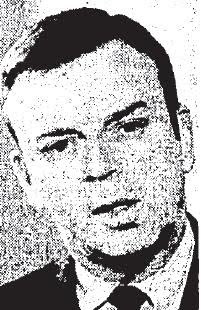
(Pictured: State's Attorney Edward V. Hanrahan)
Today, we typically associate gun rights with right-wing political organizations; however, historically, left-wing groups (see this post on gun advocacy by 19th century labor agitators) opposed to the government were among the most ardent supporters of the right to bear arms. The Panthers strongly advocated arming Black citizens as a defense against government tyranny, and a deterrent to perceived police racism. One year, the Party sold Christmas cards which showed Black children aiming rifles at Santa Claus, and asking their parents for guns and explosives for Christmas, in lieu of toys. Fred Hampton’s Chicago BPP chapter advocated similarly, and stockpiles of weapons were kept at Panther headquarters. However, they had an additional reason to arm themselves: a perceived threat from other Black organizations in Chicago.
I have already mentioned the rivalrous relationship between the BPP and the west side Vice Lords, largely based on competition for leadership status among Chicago Blacks. Hampton’s relationship with another prominent street gang, the Black P. Stone Nation (formerly known as the Blackstone Rangers), was no less strained. A Panther member described a bizarre meeting between Hampton and the BPSN in 1969:
[Jeff] Fort [leader of the BPSN], carrying only a lighted candle, met the small band of Panthers at the door and led them into a gymnasium, where a spotlight was turned out. “All around the room all I could see was the silhouette of Blackstone Rangers,” O’Neal recalled. “It looks to be maybe 500 of them. Hard-core crazies, man. They had a medicine man who was doing this dance. And then Jeff Fort said something like “There ain’t going to be no panthers in this city, there’s just going to be Stones.”
Hampton talked his way out of the meeting, but on the drive home, told his compatriots that they needed guns – lots of them. The BPP made it known that they would buy guns, and soon, they were flooded with firearms, including many stolen and illegal weapons, which they stockpiled at Panther headquarters and in the homes of BPP leadership throughout the city.
Hampton’s rhetoric towards the police was often severe. One of his favorite quotes, which he repeated frequently, was “when you kill all the pigs [police], you get complete satisfaction.” Nevertheless, Hampton did not directly advocate violence – at least not yet. During riots in Chicago in October, 1969, instigated by the Weathermen, Hampton announced himself against an immediate overthrow of the government, saying “We don’t support people who are anarchistic, chauvinistic, masochistic, and Custeristic – people leading people into confrontations they are unprepared for. Revolution and uprising is an art, and we’ve got to move from that premise. If you persist in these spontaneous acts, we are going to have to look on you as pigs or pig agents.”
Nevertheless, the Panthers’ violent rhetoric (and, in many cases, actual violence) against police and the government, and their stance towards firearms, quickly caught the wary eye of FBI agents in Washington. J. Edgar Hoover started a confidential operation known internally as “COINTELPRO – Black Extremists” which both sought intelligence on Black organizations such as the Panthers, and purposed to infiltrate, harass, and discredit the leaders of those organizations. In one memo, Hoover wrote that the purpose of the program was to “prevent the rise of a ‘messiah’ who could unify and electrify the militant black nationalist movement.” In another memo, he referred to one of COINTELPRO’s explicit purposes, to “neutralize the Black Panther Party and destroy what it stands for.”
One of the FBI’s means for destroying the Panthers was to stir up animosity and violence between them and other Black organizations. In this post, I described an anonymous letter sent to Jeff Fort, BPSN leader, implying that the Panthers were planning to assassinate him, and suggesting he take violent action. Another program infiltrated the Chicago BPP chapter with an FBI informant, William O’Neal, a former low-level street criminal, who began passing information about Fred Hampton’s weapons acquisitions back to FBI agents in 1968 (O’Neal is the source of the quote above regarding the meeting with Fort and the BPSN). He also provided the feds with a floor plan of Hampton’s apartment in 2337 W. Monroe St., and tipped off agents about times Hampton spent there.
Hampton had established the BPP headquarters at 2350 W. Madison St., just a block away from the apartment, probably because he had family that lived in the neighborhood. The area was almost entirely populated by Blacks, and the Panthers felt safe there. The apartment itself was nothing to write home about, with five small rooms, including two bedrooms and one bathroom. It was run down and dirty, drafty and cold, and was in serious need of paint. In December, 1969, Fred Hampton was living in the apartment with his girlfriend, 18-year old Deborah Johnson, who had recently discovered she was pregnant with his child.
Besides becoming a father, Hampton was also active in pulling together a BPP movement which nationally was splintering between more and less radical factions, and had suffered from internecine fighting between the leadership (possibly facilitated by FBI efforts). The Party, which had once boasted 5,000 members, probably had no more than 1,000 nationwide by late 1969. Hampton had recently returned from a visit to Panther headquarters in Oakland, where he had conferred with other Party leaders about the future of the movement.
Upon his return to Chicago, he invited the only two members of the Peoria BPP up to Chicago to discuss plans for the Party in Illinois, and they stayed with him in the apartment on Monroe St. The leader of the Peoria chapter was Mark Clark, and his only acolyte was Tony Harris. Harris was arrested in Chicago after a gun battle with police on December 2, leaving Clark alone to lead the Panthers in Peoria. Unlike Hampton, who was a political leader who sometimes became involved in street crime, Mark Clark was a street criminal who became involved in politics. He never graduated high school, and had little sense of the future. He had repeatedly told his sister he would never live to see 1970.

(Pictured: Mark Clark)
On the evening of December 3, 1969, Fred Hampton, Mark Clark, FBI informant William O’Neal, and several other BPP members ate a simple dinner of spaghetti, hot dogs, and Kool-Aid at the apartment on Madison St. The group stayed up late, talking, playing games, and cleaning a shotgun, one of the 19 firearms that Hampton kept at the apartment for protection. Slowly, the party ended with some members, including O’Neal, departing for their homes, and nine others falling asleep either in one of the two bedrooms or on mattresses in the living room. Hampton and his girlfriend Deborah Johnson eventually retired to the back (south) bedroom. The last lights finally went out around 4:00 a.m., just half an hour before all hell was to break loose.
As noted above, FBI agents had received a floor plan of the apartment from O’Neal, and were informed of the weapons and ammunition Hampton stored there. They first approached the Chicago police about performing a weapons raid on the apartment in October or November, 1969, but were turned down twice. Next, they turned to the State’s Attorney’s office, led by the recently-elected Edward V. Hanrahan. Hanrahan was a rising star in the Democratic Party in Illinois, a machine politician who was widely considered the heir-apparent for the elderly Mayor Richard J. Daley. Hanrahan had taken a popular stand in favor of law and order, and was Daley’s chief instigator of a “War on Gangs,” in which the state vigorously prosecuted gang members who committed crimes.
Hanrahan saw the BPP as a criminal organization, and a threat to law enforcement, neither of which were entirely untrue. Just two weeks earlier, two Chicago police officers had been killed in a shootout with BPP members at an abandoned hotel on Calumet Ave., at 58th Street. When presented with the FBI’s information, he saw an opportunity to start ridding the Party of its weapons, and possibly to take down its leadership.
A warrant to search Hampton’s apartment for weapons was drawn up and signed, and a team of 14 Chicago police officers who were working as investigators for the State’s Attorney office, was asked to develop a raid strategy. It would be a dangerous assignment, and the possibility of violence couldn’t be ignored. The raid was originally scheduled for 8:00 p.m. on the evening of December 3rd, but the police feared that the streets would be busy at that hour, and bystanders could be hurt or try to interfere in the raid. It was decided to serve the warrant at 4:30 a.m. on the morning of December 4th instead.
The 14 raiders were led by Sgt. Daniel Groth, and included five Black officers, among them James “Gloves” Davis, a west-side officer who had long been a bugbear for the Vice Lords and other street gangs. The raiders surrounded the building, with eight officers manning the back door and windows, and six at the front. Sgt. Groth knocked on the front door. Inside, a voice asked “Who’s there?” and Groth replied “This is the police, I have a warrant to search.”
One of the men in the apartment, Louis Truelock, ran to the back bedroom and began trying to wake Fred Hampton. “Chairman, chairman, wake up. The pigs are back” (other accounts indicate it was Vietnam veteran and BPP member Harold Bell who attempted to wake Hampton). In the living room, Peoria chapter president Mark Clark sat in a chair facing the door, holding the shotgun the group had cleaned earlier that night. Sgt. Groth again pounded on the door, this time with the butt of his gun. “Open up, police!”

(Pictured: Floor plan of Hampton's apartment, where the raid took place)
When the door didn’t open, Groth ordered Officer Davis to break it in. Davis hit the door with his shoulder, opening up into an ante room, and falling onto a mattress spread across the living room floor. At just that moment, Mark Clark raised his twelve-gauge shotgun and fired once through the door at police. Sgt. Groth smashed through the door into the living room and, in the faint glow of a space heater, saw a woman, later identified as Brenda Harris, across the room, who appeared to be loading a gun and preparing to shoot. Sgt. Groth fired at her as Officer Davis arose from the mattress and spied Clark sitting on his chair with the shotgun. Davis fired three times at Clark, likely killing him at that point.
The other officers, hearing the gunfire, followed into the darkness and began a wild search through the apartment for the others. Without the aid of light or much space in an apartment that now held nine Black Panthers and 14 police officers, panicked officers mistook the sound of other officers’ guns for return fire from the Panthers, leading to more confused shooting. The raiders began piling up the apartment-dwellers in the kitchen as the found them.
Sgt. Groth later claimed that, at five different points during the raid, he called for his men to cease firing, and shouted for the Panthers to surrender. Each time, he claimed, a voice yelled “Shoot it out!”, and the gunfire continued. At one point, Louis Truelock and Deborah Johnson walked out of the rear bedroom with their hands up, and surrendered to police. After collecting them in the kitchen with the others, besides Clark, who was dead, the raiders went into the back bedroom, where they found Fred Hampton sprawled face-down on the bed, killed by two bullets which had passed through the thin walls of the apartment, and which were later determined to have been fired from Officer Davis’ service weapon. The raiders claimed that, on the floor by Hampton’s right hand was a .45 caliber automatic weapon, and by his left hand, a shotgun. When the gunfire finally ended, Hampton and Clark were dead, and four other Panthers and one police officer were shot and wounded. All seven surviving apartment-dwellers were arrested on charges of attempted murder.
The vast majority of Chicagoans viewed Fred Hampton as a violent militant and agitator, and saw the Panthers’ attacks on the raiders as murderous and, therefore, the raiders’ return fire as justifiable homicide. However, from the start, there were many unanswered questions. Why did the police serve a warrant at 4:30 in the morning? And after Clark shot through the door, why didn’t they employ tear gas or simply surround the apartment, instead of venturing inside for a gunfight? Who fired first, and who fired most?
Several Black leaders were quick to condemn the raid, and rumors flew that Hampton was intentionally murdered by police. That day, at the concurrent trial of the “Chicago Seven” associated with the previous year’s Democratic National Convention riots, defense attorney William Kunstler asked the court for an adjournment for mourning, “because of the murder of Fred Hampton by police in Chicago early today.” A spokesman for the NAACP branded the killings as “modern-day lynchings”. Operation Breadbasket leader Jesse Jackson told reporters he was “personally grieved” by Hampton’s death, saying “he was a personal friend of mine,” and that he would demand a detailed investigation into the incident.
At high schools throughout the city and suburbs, Black students walked out and congregated at the Civic Center downtown for a massive protest. At Hampton’s former high school in Maywood, Proviso East, classes were cancelled until January in order to avoid violence. The mayors of Maywood and Gary, Indiana, and the president of Malcolm X College all lauded Hampton’s work and insinuated that his death was no accident. Panther “Defense Minister” and post-Hampton leader Bobby “Che” Rush announced “inside information” he claimed to have received that the raiding party included known KKK members, and that Hampton was drugged and then killed in his sleep.
State’s Attorney Hanrahan repeatedly told reporters that the officers had acted in a completely professional manner, serving a legitimate warrant, and defending themselves when fired upon. The first of many investigations of the incident was by the Chicago police internal investigation division (IID). The officers involved in the raid were acting at the behest of the State’s Attorney office, but IID performed an investigation anyway, quickly clearing the officers of any wrongdoing.
The next investigation was at the behest of the Cook county coroner’s office. At the conclusion of a twelve-day inquest on January 21, 1970, a fury of three Blacks and three whites unanimously vindicated the raiders’ story. A chemist for the coroner’s office reported no evidence of drugs or alcohol in Hampton’s body. Ballistics crime lab expert John Sadunas examined the shell casings found at the crime scene, and determined that three shots were fired at police, including two from Brenda Harris’ weapon.
 (Pictured: Coroner's jury investigates the crime scene)
It appeared that the case was over. The grand jury found that Fred Hampton was not murdered, and that the State’s Attorney’s raiding party had acted in strict accordance with police principles, attempting repeatedly to stop the shooting, but each time being rebuffed with “Shoot it out!” But, in fact, the saga of Fred Hampton was only beginning, and the incident would be repeatedly replayed in court for the next ten years.
One limitation of the coroners’ investigation was that the police had failed to properly seal the crime scene after the incident. Before the crime lab experts showed up on the scene, police had already removed all the weapons from the house and loaded them into a police vehicle. An attorney for the BPP got to the apartment early and removed the part of the door in which Clark’s shotgun shell had passed, taking it with him and making it available to the inquest only under court order. The BPP had allowed curiosity-seekers to tour the apartment and touch objects and furniture, and possibly take with them some of the shell casings. State’s Attorney Hanrahan put daily pressure on the coroner to finish the inquest, meaning that the crime lab was unable to fully examine the ballistics and fingerprint evidence that remained.
One limitation of the coroners’ investigation was that the police had failed to properly seal the crime scene after the incident. Before the crime lab experts showed up on the scene, police had already removed all the weapons from the house and loaded them into a police vehicle. An attorney for the BPP got to the apartment early and removed the part of the door in which Clark’s shotgun shell had passed, taking it with him and making it available to the inquest only under court order. The BPP had allowed curiosity-seekers to tour the apartment and touch objects and furniture, and possibly take with them some of the shell casings. State’s Attorney Hanrahan put daily pressure on the coroner to finish the inquest, meaning that the crime lab was unable to fully examine the ballistics and fingerprint evidence that remained.
For all of these reasons, and under intense pressure from the NAACP and other groups, the U.S. Department of Justice launched a probe into the incident, under the auspices of determining whether Hampton’s civil rights had been violated by the raiders. The jury methodically took statements from each of the raiders, examined the evidence, even exhumed Hampton’s body, which had been buried at the family’s native home in Haynesville, Louisiana.
The federal grand jury report, numbering 243 pages, was released in May, 1970, and its findings were damning. With additional time to investigate the evidence, crime lab expert Sadunas changed his testimony from that given at the coroner’s inquest: All but one of the roughly 100 shell casings found at the scene came from police weapons. Only Mark Clark’s weapon was fired among those belonging to the BPP. The violence at the scene was almost entirely due to police heavy-handedness. The post-incident crime scene investigation was completely inadequate and suggested an attempt to cover up evidence of police misconduct. State’s Attorney Hanrahan’s statements to the press and the coroner’s inquiry were disingenuous and misleading, and his efforts had materially obstructed the coroner's inquest.
The federal grand jury concluded that the original IID investigation was a complete sham, with each officer being asked questions which had been previously written up and given to them, along with a set of answers. The seven surviving apartment-dwellers refused to testify to the federal grand jury, and on that basis, the jury returned no indictments, but their report was unequivocal: “Physical evidence, standing alone and unexplained, is sufficient to establish probable cause to charge the officers with a willful violation of these survivors’ civil rights.”
With no evidence that anyone in the apartment except Clark had fired against police, Hanrahan was forced to immediately drop all charges against the seven survivors of the raid. The heads of the IID and the police crime lab, plus the deputy police superintendant, were all demoted, and the State’s Attorney police force was disbanded.
The injustice of the raid and the unnecessary violence, however, meant that the grand jury’s report did little to satisfy Hanrahan’s detractors. On the anniversary of Hampton’s death, December 4, 1970, protests throughout the city turned violent. El train conductors refused to make stops at the 63rd and Dan Ryan station, due to the presence of an angry mob on the platform. Continued political pressure finally led to the empaneling of a third grand jury in a special Cook county session, for another investigation of the incident.
After much legal wrangling, the special grand jury indicted eight of the police raiders, including Sgt. Groth and Officer Davis, crime lab expert John Sadunas, and State’s Attorney Edward Hanrahan, along with several other members of his office. The Chicago Bar Association, the Better Government Association, and the Chicago Crime Commission all advised Hanrahan to step down. Even fellow Democrats, including Sen. Adlai Stevenson, refused to support Hanrahan. He was political kryptonite.
At Hanrahan’s 1972 trial, the apartment-dwellers finally gave their own version of the events that night. Before the federal grand jury’s report, it is unlikely that most Chicagoans would have given them any credence at all, but with the cloud of suspicion hanging over the State’s Attorney, their reports took on an air of possibility. Louis Truelock testified that he had shouted to the police “Stop shooting, stop shooting. We have a pregnant sister in here, a pregnant woman,” before he and Deborah Johnson surrendered from the back bedroom. He testified that one officer threw open her robe, saying “What do you know? We have a broad here.” Truelock testified that, after surrendering and being handcuffed in the kitchen, he heard officers say in another room, “he’s barely alive”, followed by more shooting, and then “he’s good and dead now”.
At the time of Hanrahan's trial, the role of the FBI and its informant William O’Neal was still unknown, although some suspected Truelock as a stool pidgeon, as he was by far the oldest of the apartment-dwellers, and he had a length rap sheet. At one point, defense attorney John Cohglan asked Truelock on the stand, using the slang of the day, “Did you drop the dime on the chairman’s crib?”
But the biggest bombshell in the case was the release of a set of statements purportedly made by the survivors to their attorneys shortly after the incident. In them, the Panthers claimed that at least five people in the apartment held guns, and at least four shots were made at police. These statements contradicted the ballistics evidence, and those whose names were on them disowned their validity.
In any case, the statements made their mark, and in October, 1972, after a 16 week trial, the Cook County Circuit Court acquitted the defendents. This ended the possibility of criminal culpability for Hanrahan and the raiders, but a civil suit for wrongful death was filed shortly after, seeking $48 million from Hanrahan, the city of Chicago, Cook County and the State of Illinois.
That trial, one of the longest in Illinois history, lasted 18 months, and at its conclusion in April, 1977, also acquitted Hanrahan. It was during this trial, however, that the FBI’s role in surveillance against the BPP, and in driving the raid on Hampton’s apartment, was revealed, leading to further embarrassment for the state.
On appeal, the U.S. Court of Appeals reinstated the claim in 1979, and yet another trial took place. This one finally settled in 1983 with a $1.85 million payoff to the families of Hampton and Clark, paid from the city of Chicago, Cook County, and the FBI. It was the largest settlement in a civil rights case up to that date.
What really happened in the early morning of December 4, 1969? After countless grand juries and trials, all of the details are still not known, will likely never be known. It seems plausible that the raiding party, or at least State’s Attorney Hanrahan, knew that Fred Hampton was in the apartment that day. It’s at least suspicious that the raiders chose to invade the apartment instead of waiting for back-up, having a stand-off, or employing tear gas. On the other hand, why would the raiders have spent so many shells, leaving evidence of incompetence all over the apartment, if their sole purpose was to murder Hampton? And if the entire incident was a frame-up, why wouldn’t the framers have fired more of the weapons found in the apartment to cover up their crime? Above all, who – if anyone — yelled “Shoot it out”?
The BPP was already in serious decline at the time of Hampton’s death. Bobby Rush continued leading the Illinois chapter for a few more years until it essentially disappeared, then moved into politics, winning a seat on city council in 1980, and then the U.S. House of Representatives in 1993, representing Illinois’ first district, which covers a significant swath of the South side. In 2000, Bobby Rush defeated little-known community organizer Barack Obama in his challenge for the seat, and Rush remains the only politician ever to defeat Obama in an election.
Edward Hanrahan was slated by the Democratic Party to run again for State’s Attorney in 1972, but after harsh public backlash, dropped him from the ticket. Hanrahan ran anyway, and lost. In 1974, he ran for the U.S. House in the Illinois 6th district in DuPage Country, but was defeated by Republican Henry Hyde, who held the seat until 2007. Hanrahan also lost in a mayoral contest against incumbent Democrat Richard J. Daley in 1975, and lost an aldermanic election in 1980 for the 36th ward. He continued in private legal practice until his death in June, 2009.
A month after Fred Hampton’s death in 1969, his wife, Deborah Johnson, gave birth to Fred Hampton, Jr. Later, she took on an Afrocentric name, Akua Nkeri, and became involved in the Uhuru movement. Fred Hampton, Jr., continued in his father’s footsteps as a lightning rod for racial controversy. In 1993, he was sentenced to serve 18 years in prison for firebombing two Korean-owned South side businesses in the wake of the Rodney King verdict the previous year. Hampton, Jr., served nine years and was released in 2002.
The house at 2337 W. Monroe still stands, though it has been substantially renovated since 1969. Over the last ten years, the neighborhood in which it stands has gentrified, from what was once one of the toughest districts in the city to a racially-mixed area including white residents priced out of nearer areas like Wicker Park and Bucktown. In 2006, a motion in city council failed which would have placed one of the ubiquitous brown “honorary” street signs at the corner of Monroe and Western Ave, indicating the block as “Honorary Chairman Fred Hampton St.” One wonders whether the residents of the building still receive a lot of curiosity-seekers; a sign next to the door reads “No Soliciting, No Loitering, No Trespassing – Violators Will Be Prosecuted”.


